Pyhä väki -näyttely | Holy väki -exhibition
“In the context of folk religion, the notion of väki refers to both an impersonal otherworldly power and to otherworldly beings. Many different entities were believed to possess väki in the Finnish-Karelian folk religion: for example the forest, water, earth, fire, rock, metal, and the dead.”
-Sonja Hukantaival
These works were put on display for Lumi’s first solo exhibition. The themes revolve around nature, depictions of holiness, and folklore.
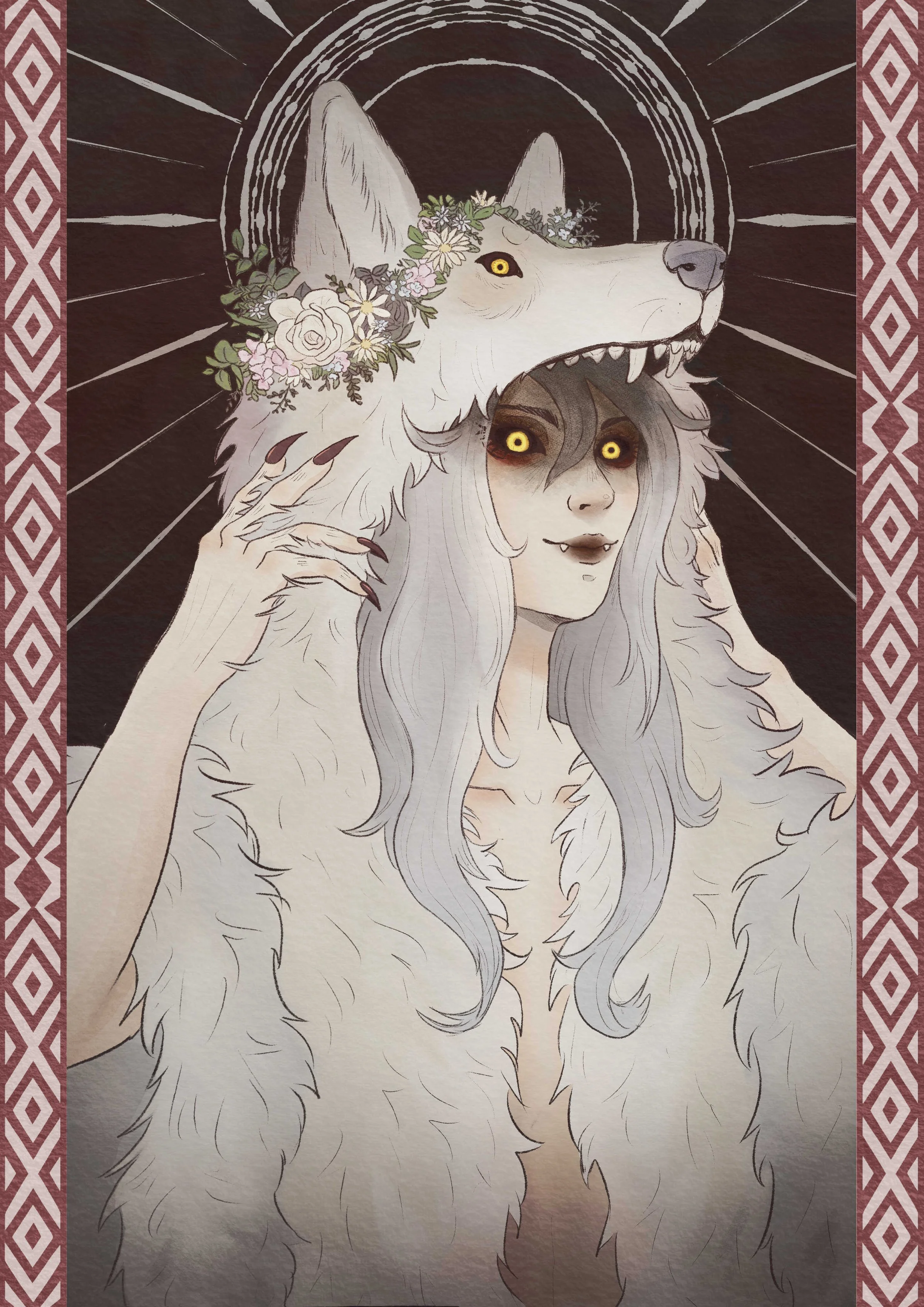
Sudenmorsian | Wolf-bride (2026) In Finnish, Karelian and Estonian folklore, if a wedding did not welcome travelers and beggars (who were often seers or witches in disguise), they risked becoming turned into wolves.
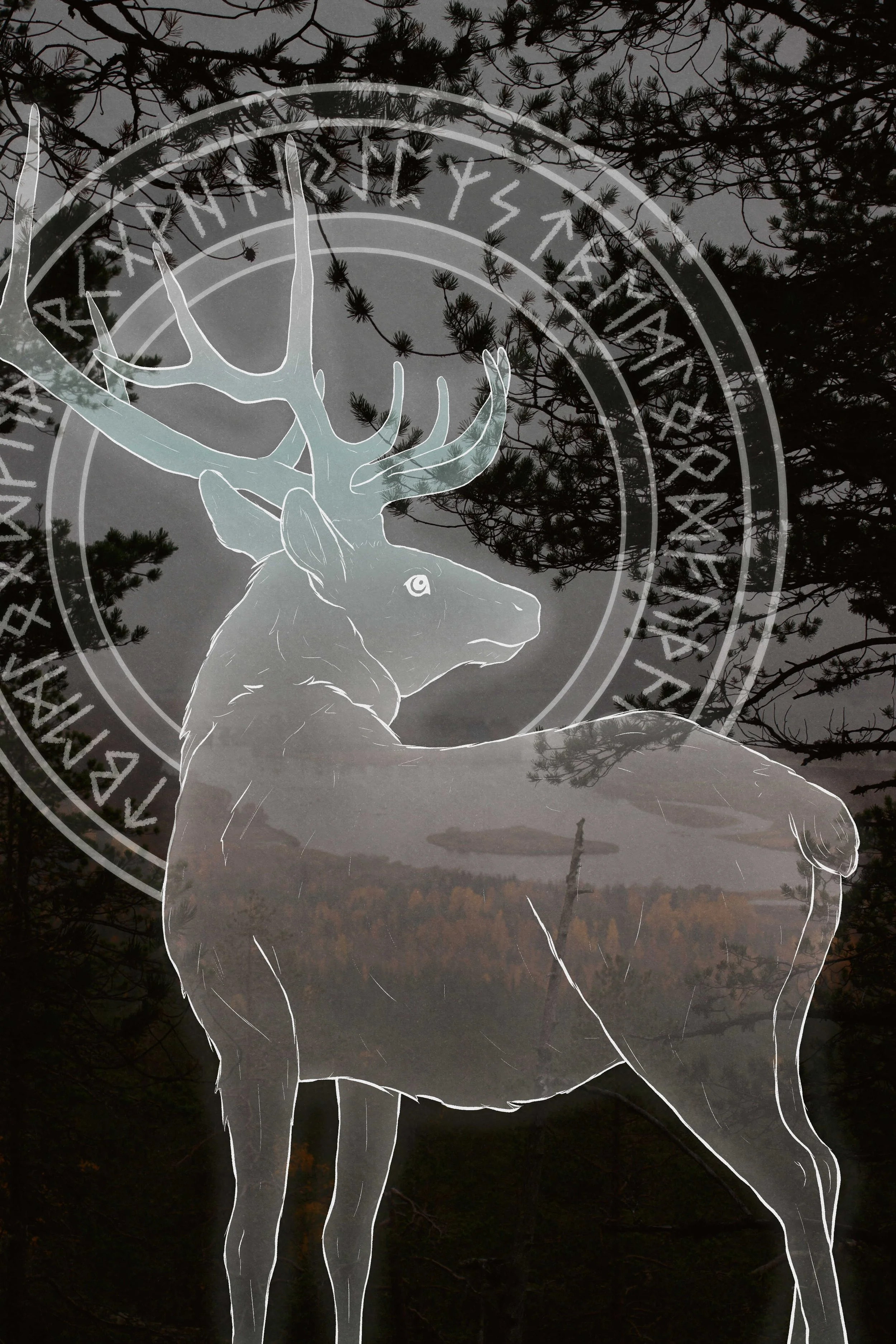
Riimut | Runes (2026) Photograph from Aavasaksa. Circling around the antlers are the Elder Futhark runes, repeating three times. I wanted to display all 24 runes rather than writing something.
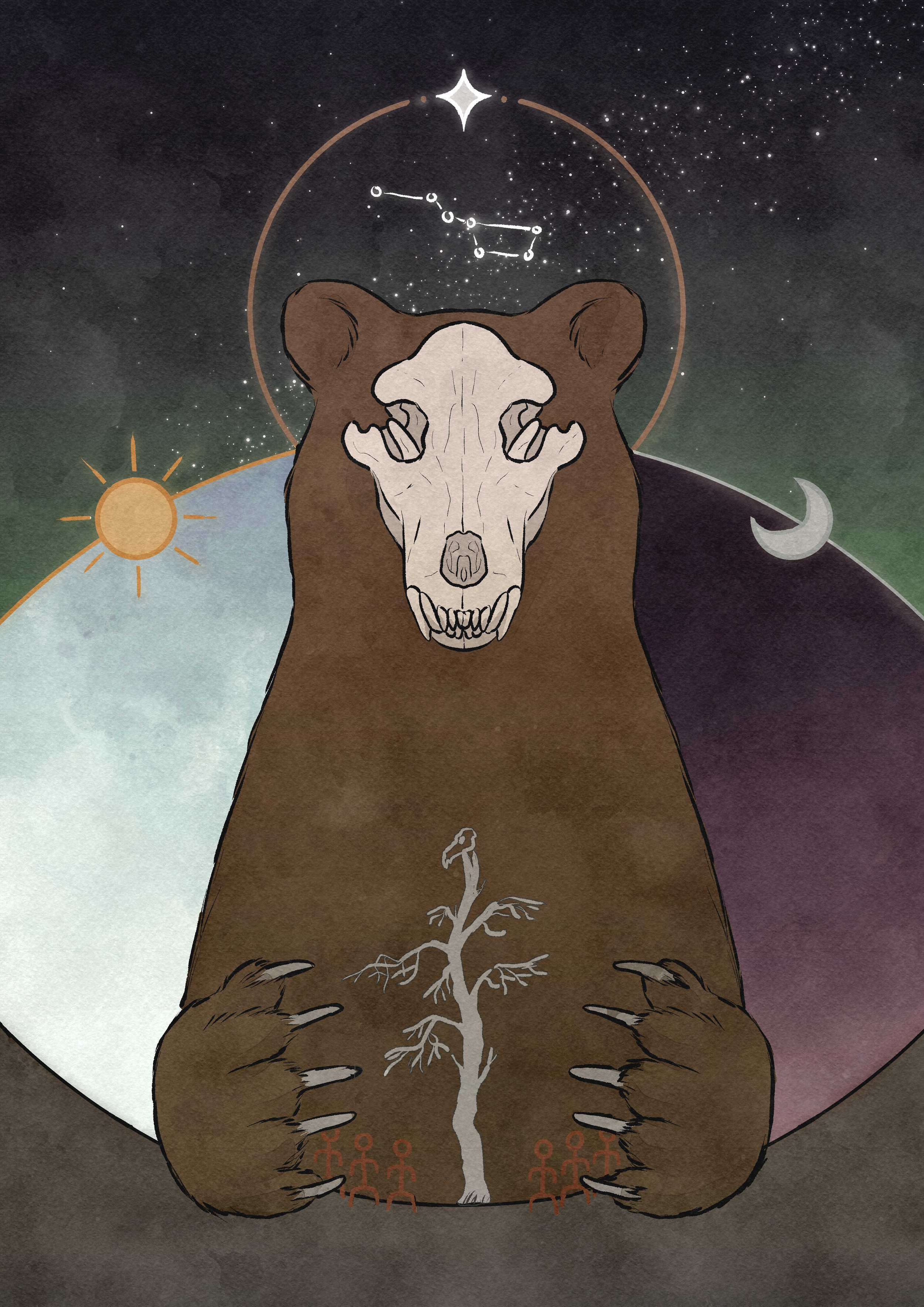
Karhu | Bear (2021) In Finno-Ugric myths, the Bear is the primordial origin of all humanity.
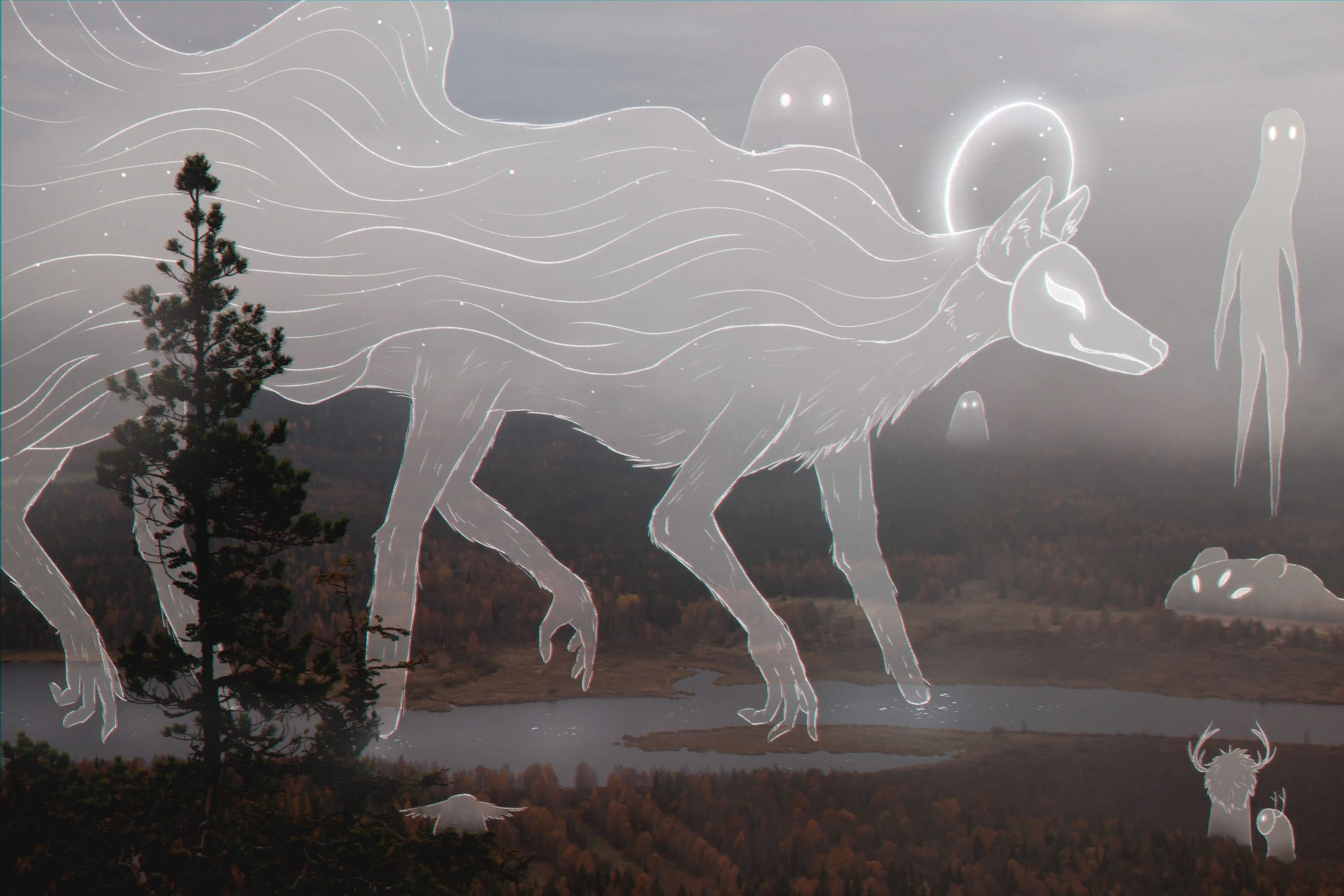
Vaeltaja | Nomad (2022) Photograph is from Aavasaksa. The mist makes strange creatures more visible.
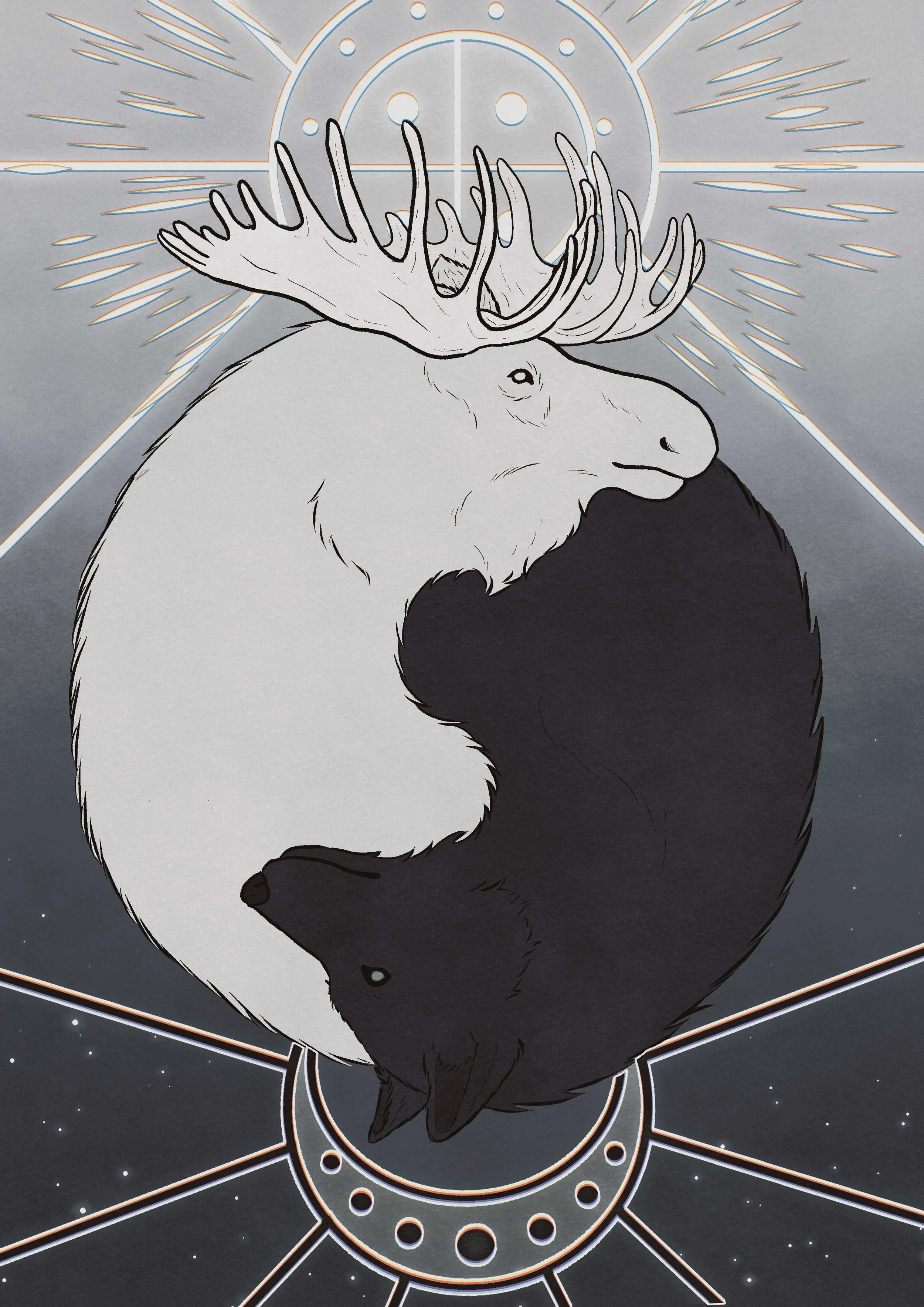
Emo ja iso | Mother and Father (2026) There are multiple depictions in cave paintings of moose or other antlered creatures carrying the sun on their antlers. I felt having a wolf as the counterpart and representative of the moon was a perfect balance to that.
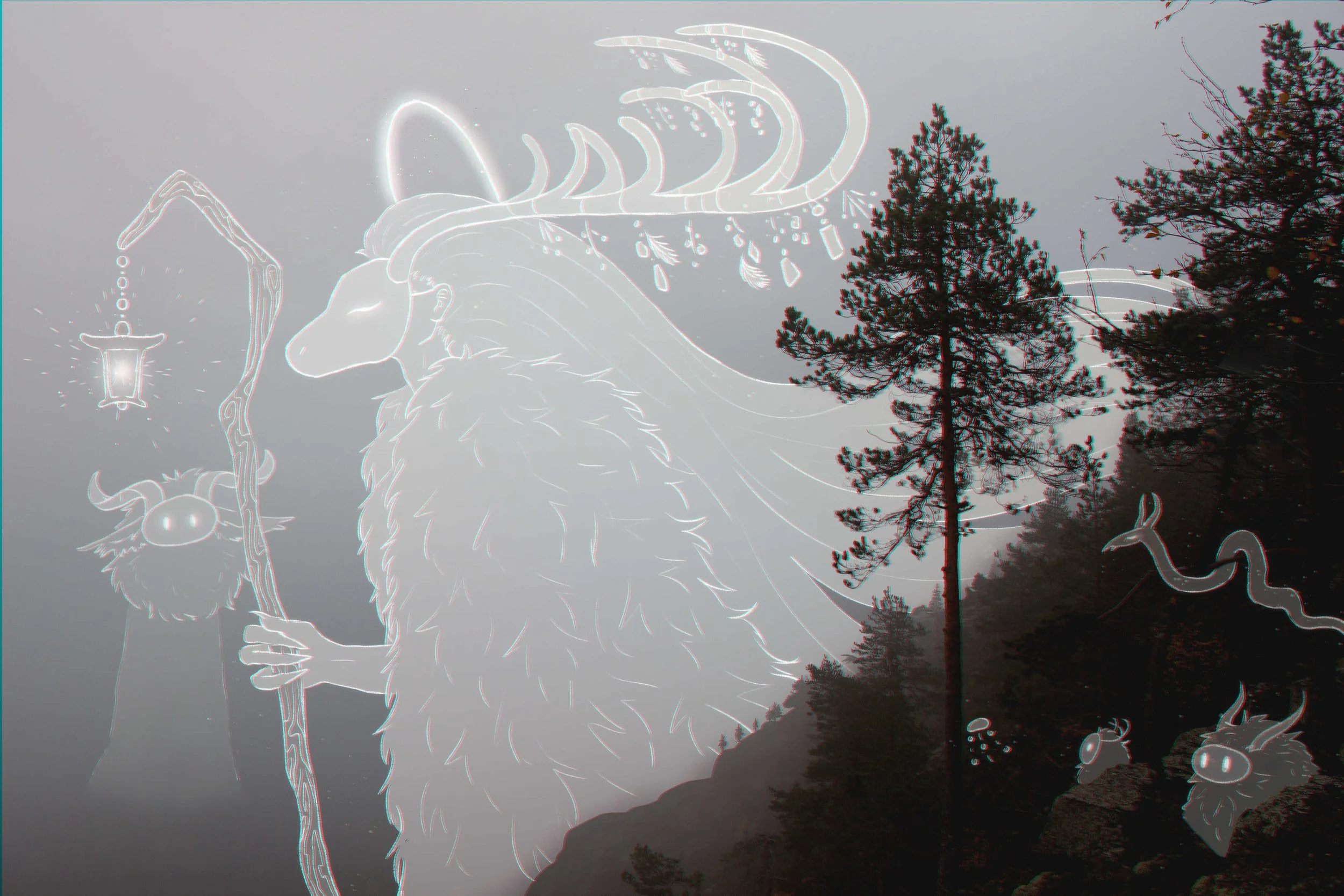
Kulkija | Wandered (2022) Photograph from Aavasaksa. I enjoy depicting the divine masked; I don't think we should be able to "see" their faces.
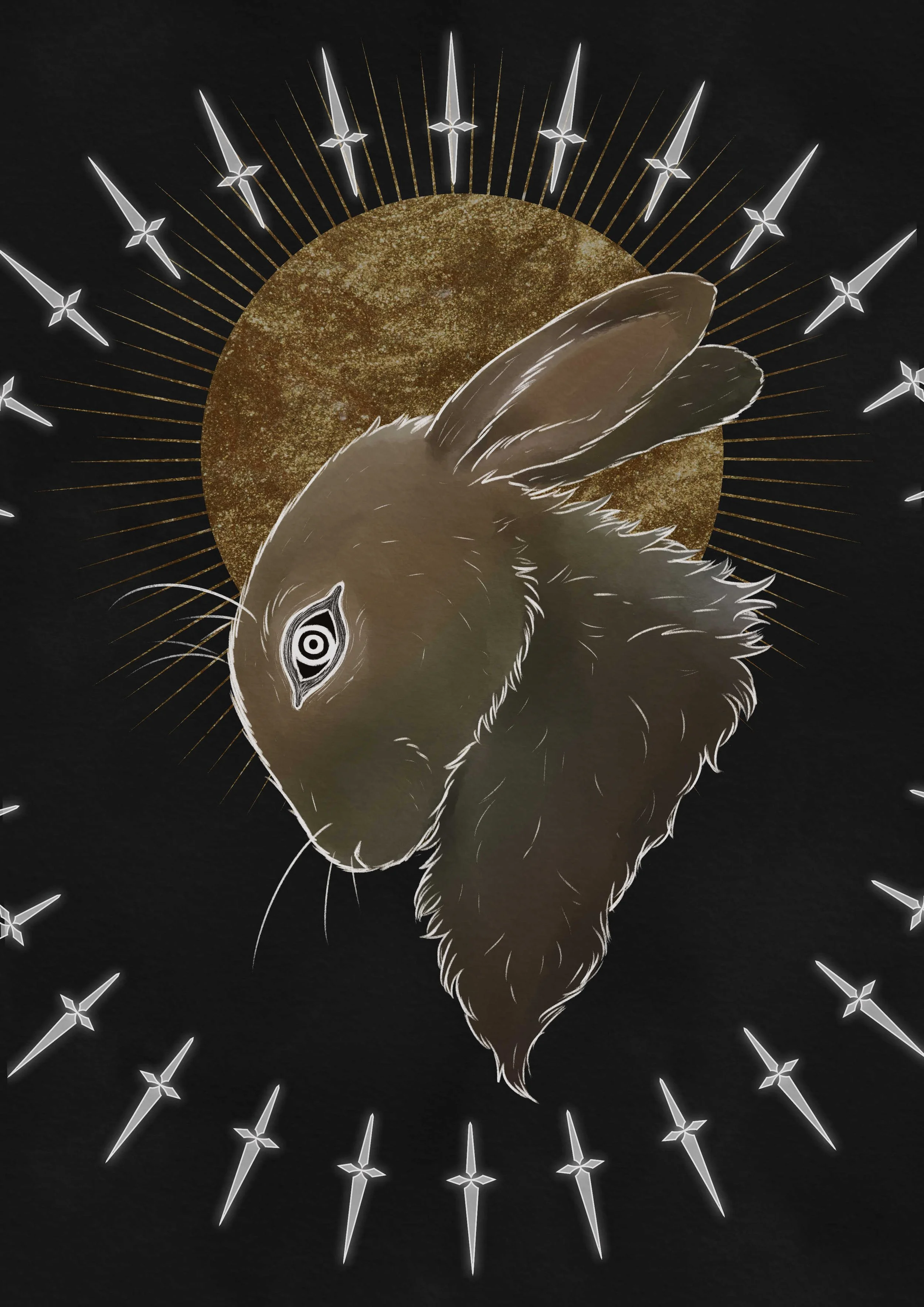
Martyyri | Martyr (2026) Inspired by "Watership Down"; "All the world will be your enemy, Prince with a Thousand Enemies, and whenever they catch you, they will kill you. But first they must catch you."
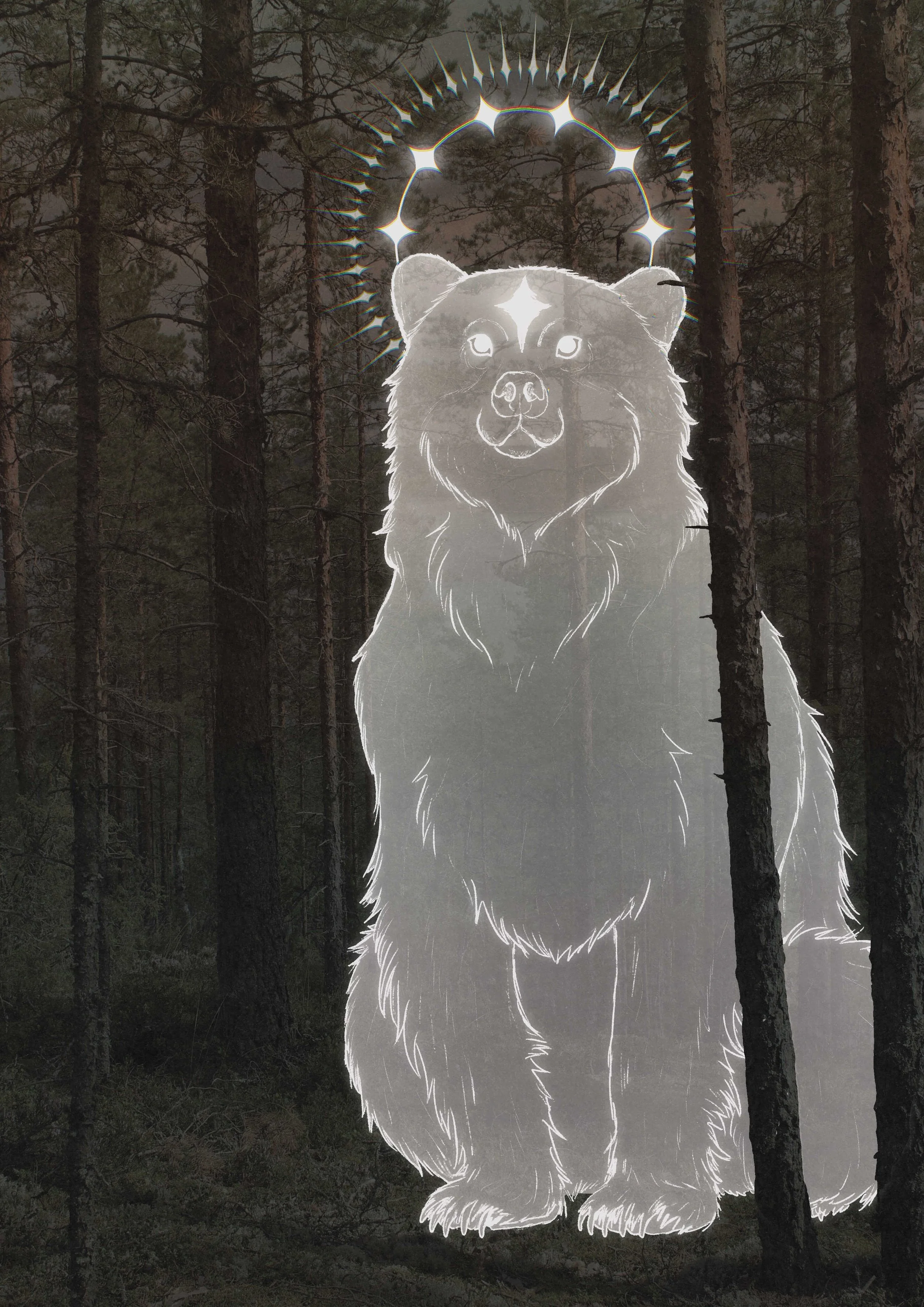
Otava | Great Bear | (2026) Otava is the Big Dipper, in folklore the celestial origin and home of the Bear. The six stars and seventh on the bear's forehead equal to the constellation's number of stars.
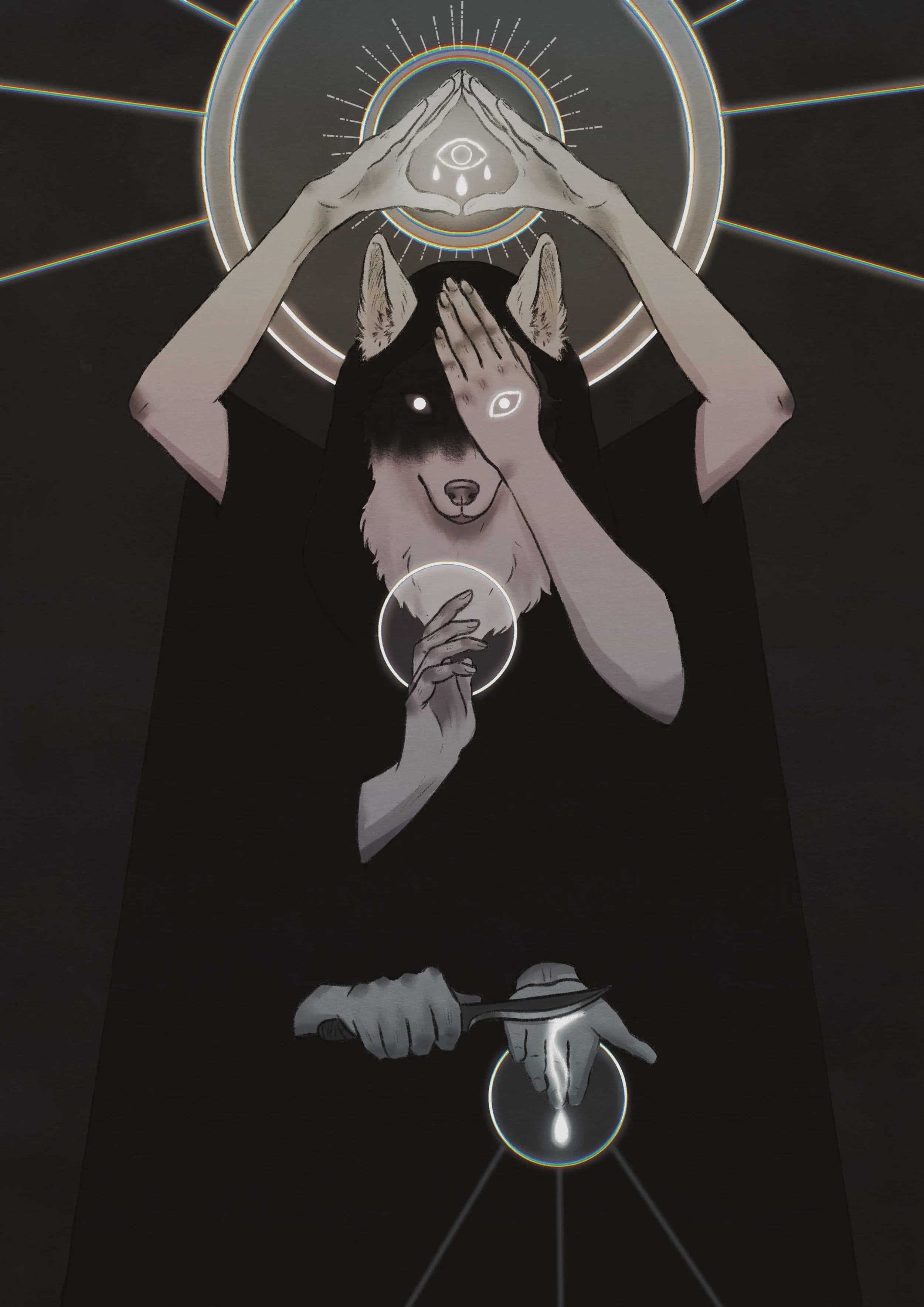
Pyhimys | Saint (2026) Inspired by Christian, Hindu and Buddhist depictions of the divine. I deliberately chose to give the saint human hands (instead of clawed or otherwise monstrous) to highlight the wolf-face.
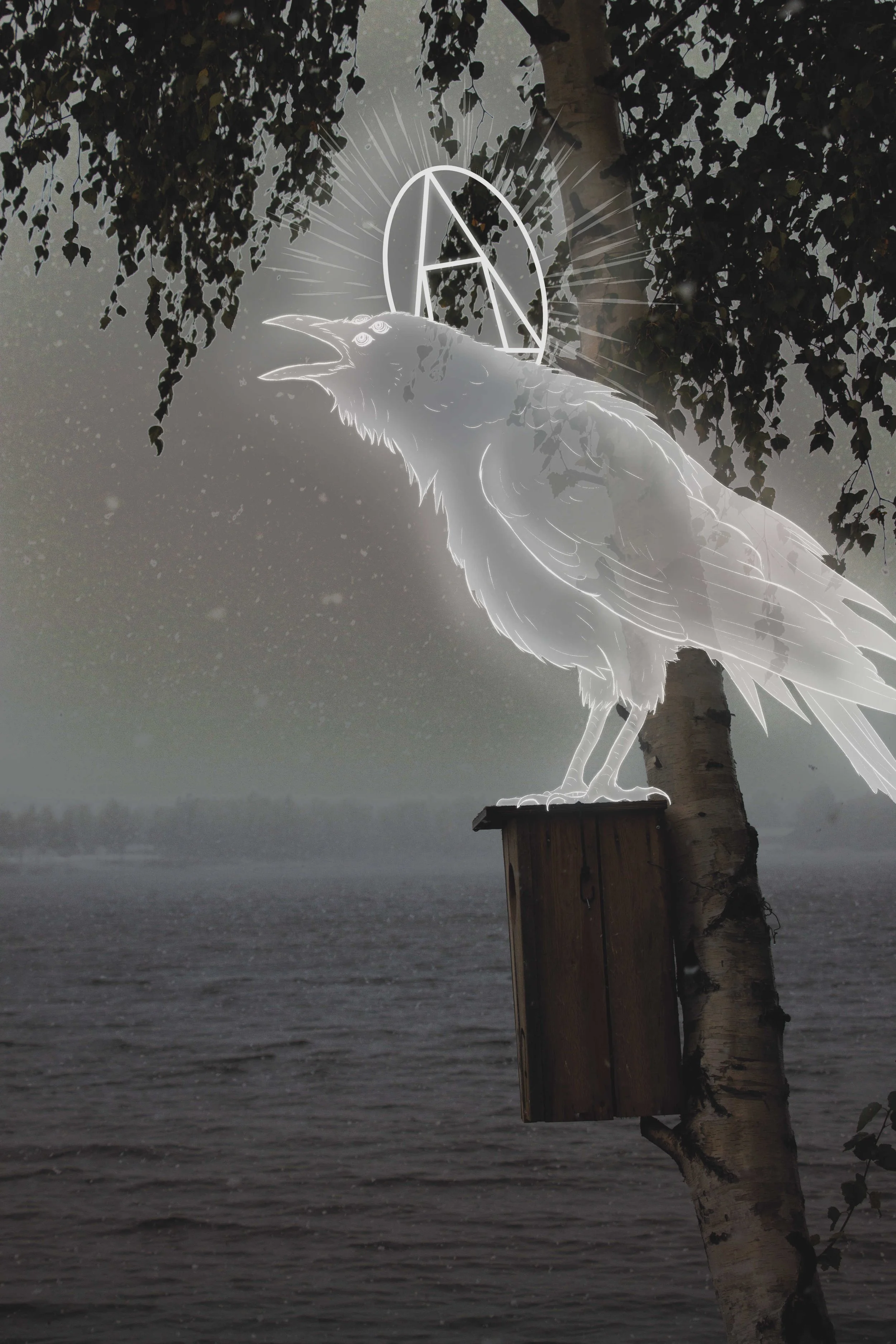
Korppi | Raven (2026) Photograph from Tornio. In many myths, ravens are symbols of wisdom, cunning, and knowledge. The raven has three eyes, also a common motif for esoteric knowledge or skill; behind its head is an alchemical symbol.